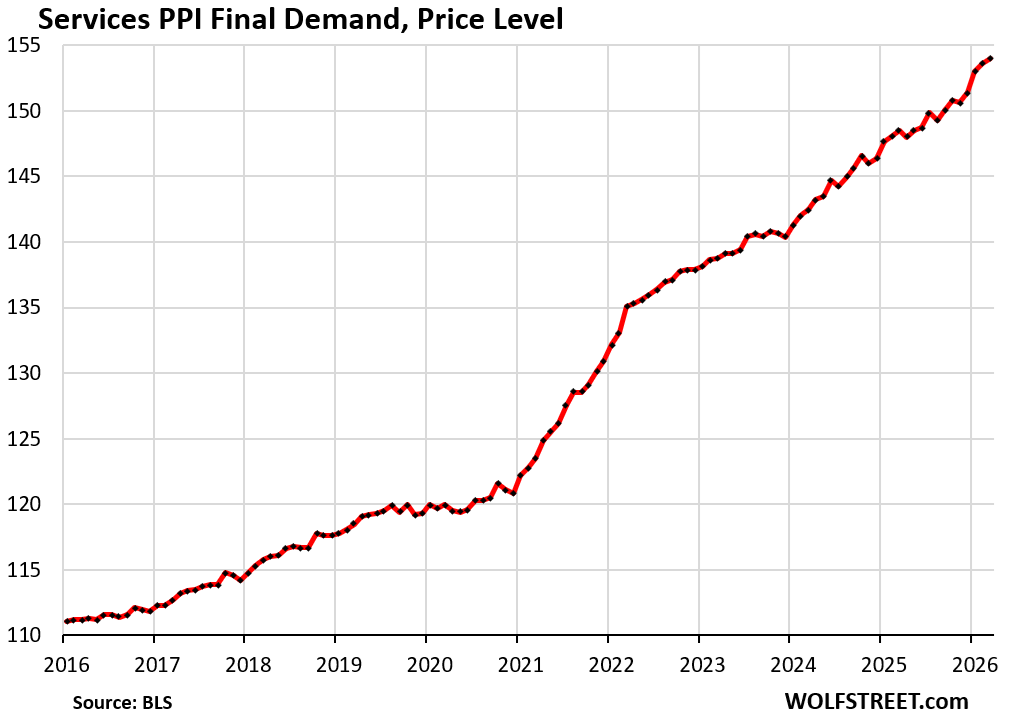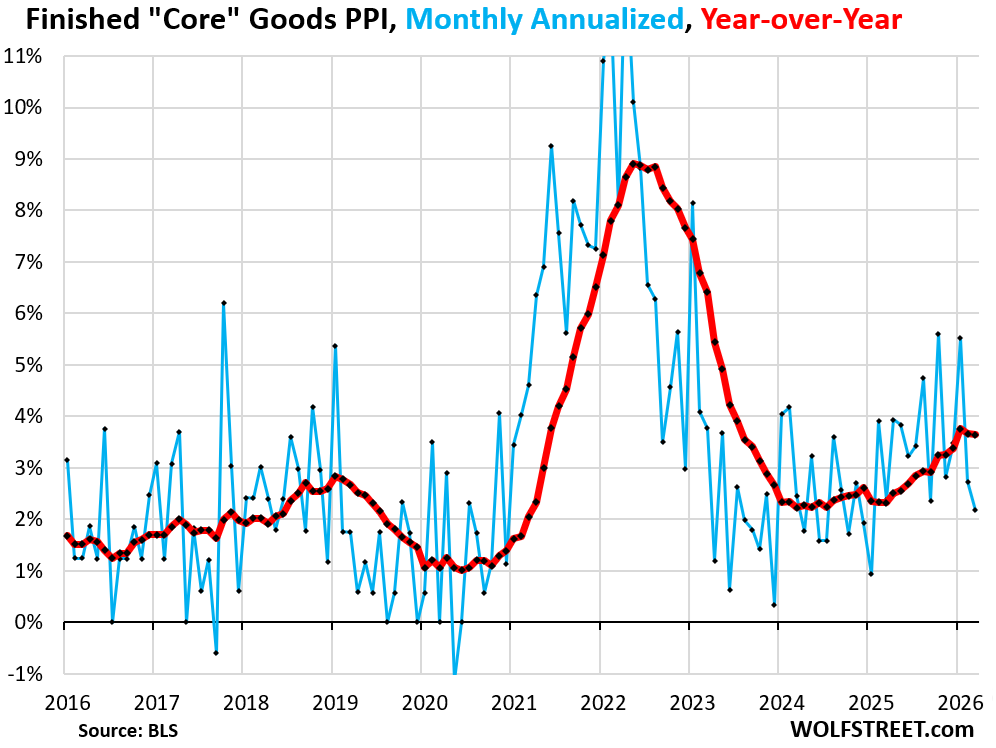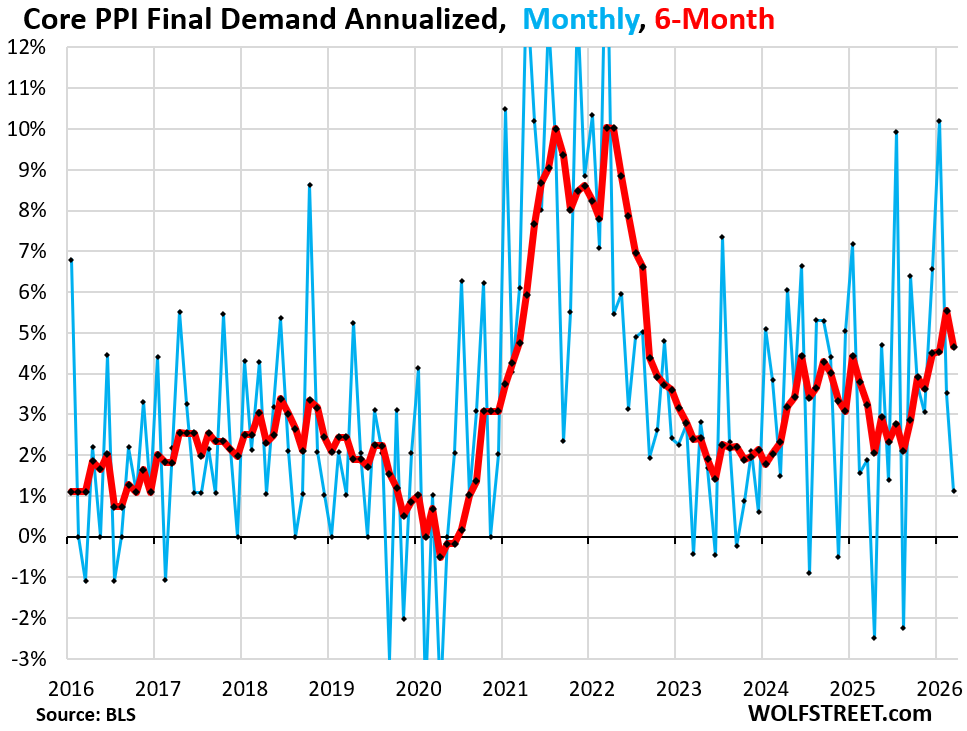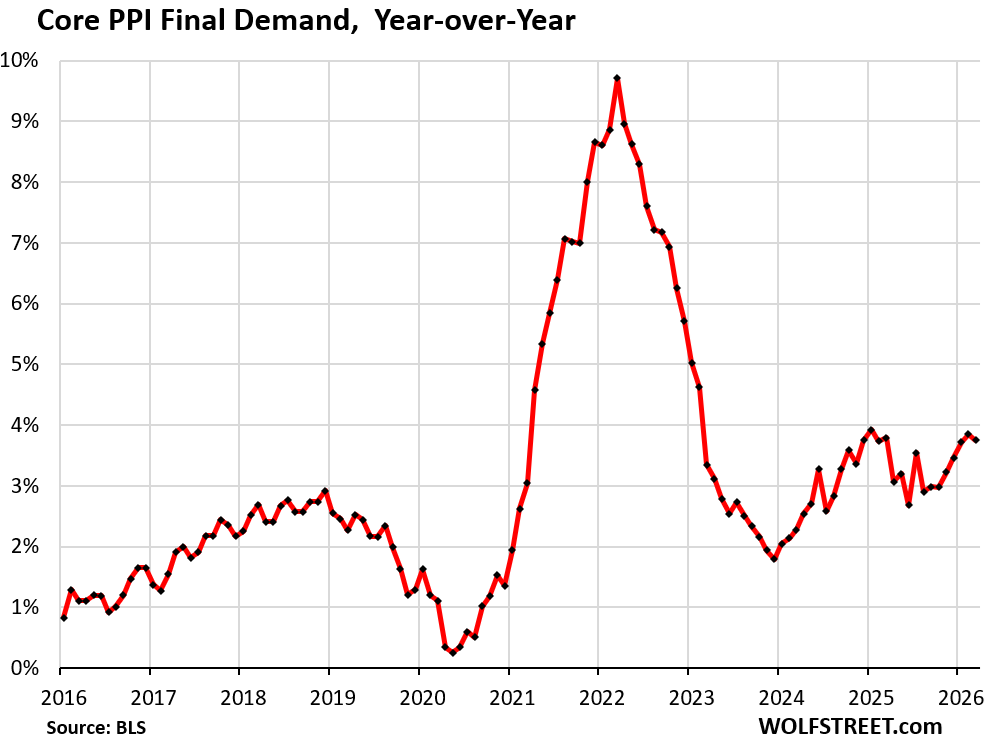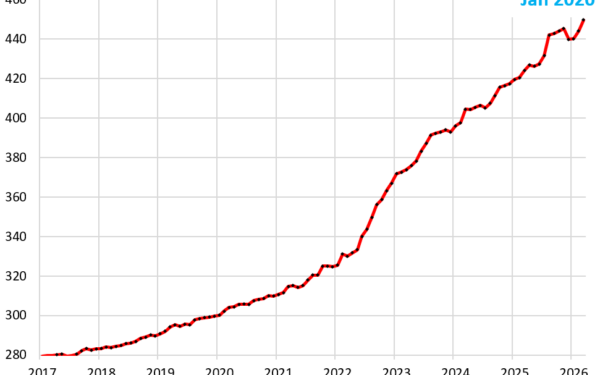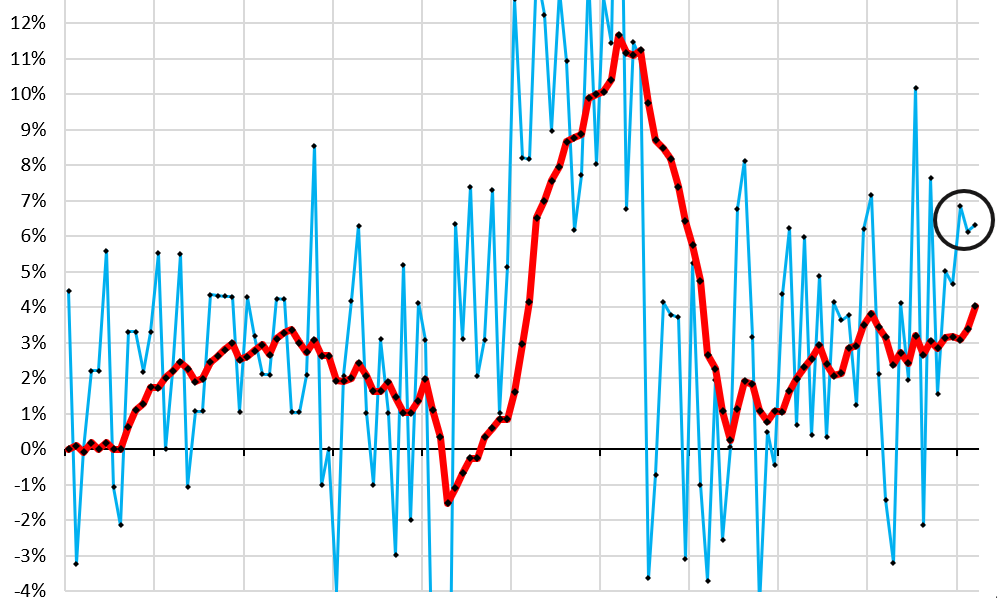
Producer prices jumped 0.51% in March from February, seasonally adjusted, annualizing to 6.3%. This marks the third consecutive month of annualized gains above 6%: 6.1% in February and 6.8% in January. Year-over-year, the final demand PPI hit 4.0%, the highest since February 2023. Bureau of Labor Statistics data released today shows persistent inflation pressure at the producer level, despite offsets from food and services.
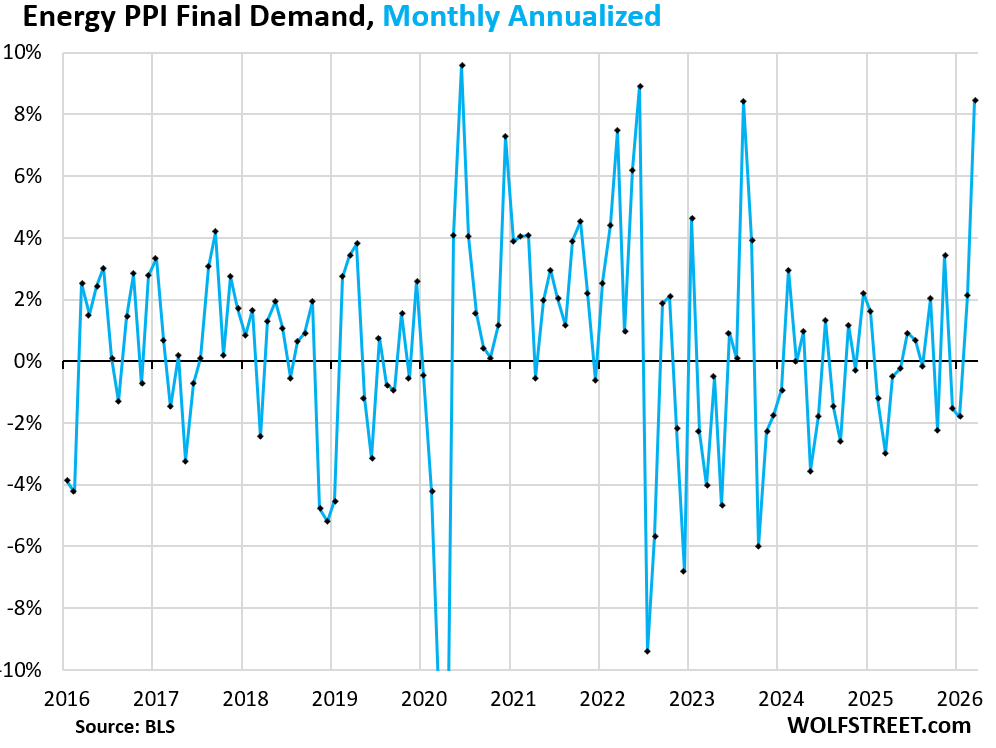
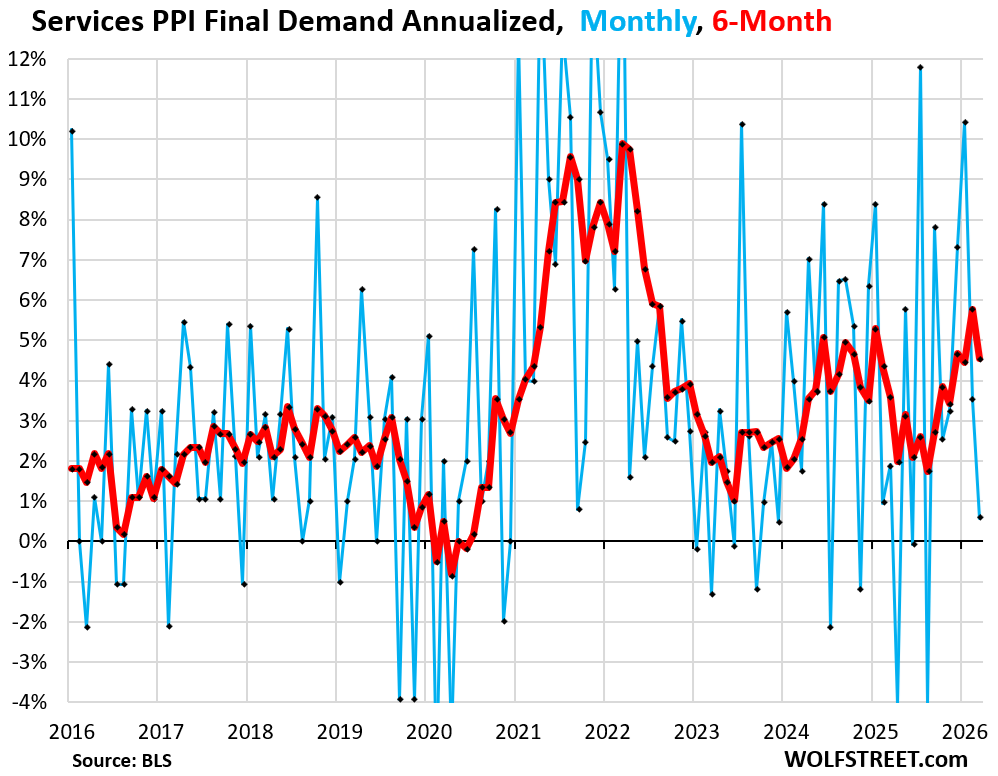
The surge would have been worse without counterbalances. Energy prices spiked 8.5% month-to-month (165% annualized), pushing the year-over-year gain to 11.2% from a decline last month. Yet food prices for producers dropped 0.27%, and services—68% of the overall PPI—edged up just 0.05% (0.6% annualized). Trade services, 19% of the total PPI, fell 0.3% for the second straight month after January and December spikes.
Energy Drives the Spike, But Volatility Reigns
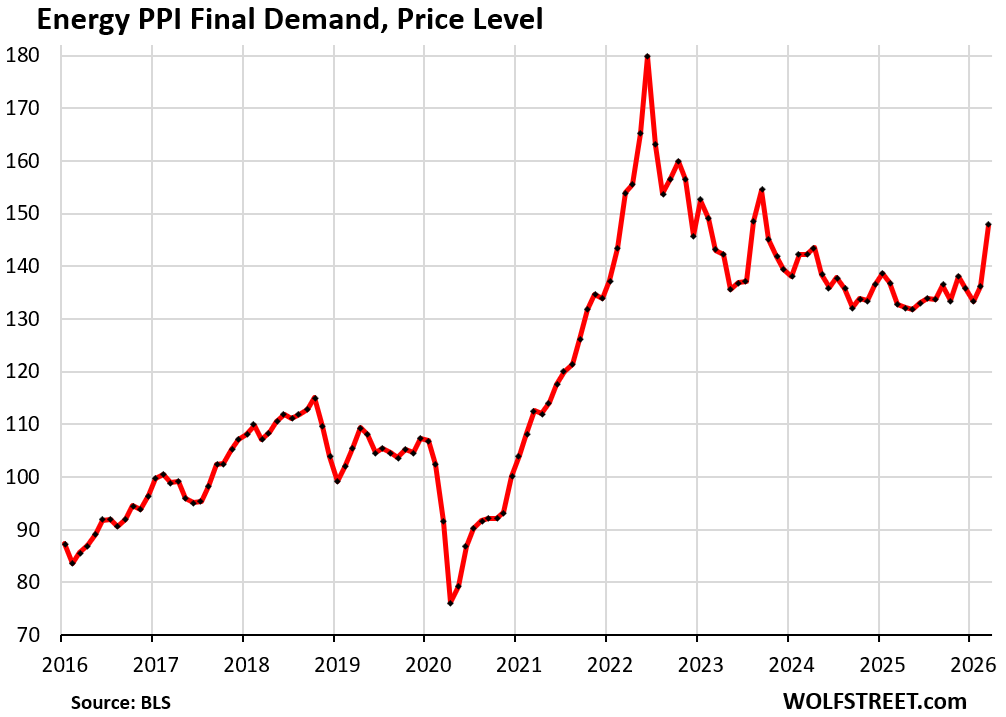
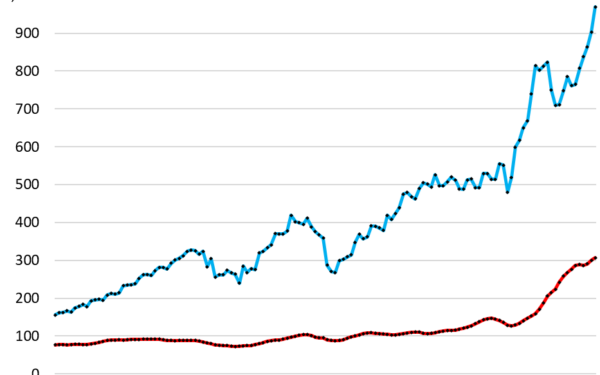
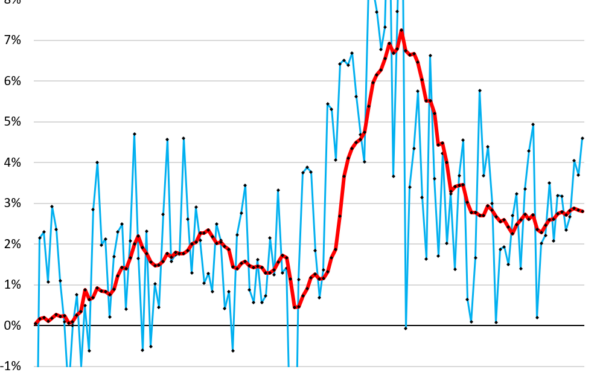
Energy remains the wild card. March’s 8.5% leap followed February’s gain, lifting the energy PPI price index to its highest since September 2023. From mid-2022 peaks through early 2025 projections, energy plunged but stays far above pre-COVID levels, fueled by electricity costs. Oil prices hovered around $85 per barrel in March amid Red Sea disruptions and OPEC+ cuts, explaining part of the jump.
Don’t overreact to one month. Energy’s year-over-year swings deliver whiplash: from deflation to double-digits. The index chart reveals a sawtooth pattern—no sustained uptrend yet. Still, repeated monthly surges signal supply strains that could filter through supply chains.
Services and Food Provide Temporary Relief
Services PPI, the PPI heavyweight at 68%, stalled after three months of acceleration. Its six-month annualized rate eased to 4.6% from February’s 5.8%, the highest since August 2022. Trade services’ decline—retail margins and wholesale costs—pulled it lower. Without this flat reading, March’s overall PPI would have exploded higher.
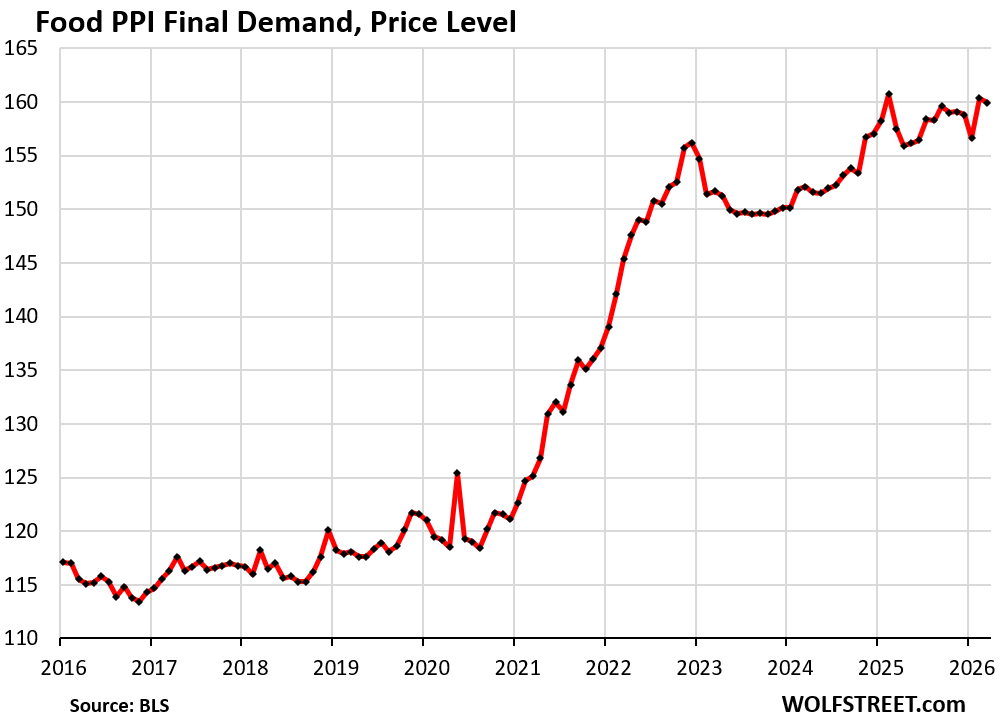
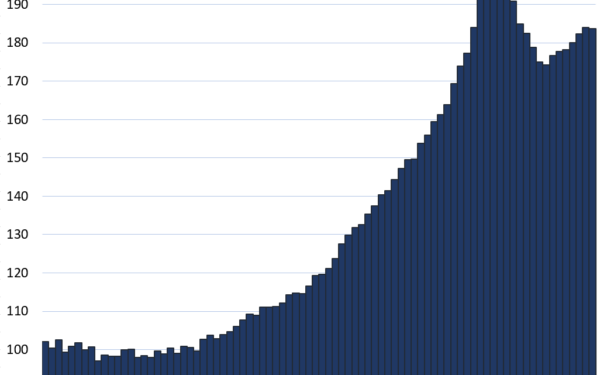
Food PPI fell 0.27% after February’s 2.39% spike and January’s plunge. Year-over-year, it reached 1.5%. The price index sits 33% above mid-2020 lows but has plateaued, bumping a ceiling. Commodity volatility from weather, Ukraine war exports, and U.S. farm output explains the chop.
These offsets mask deeper trends. Services inflation dominated January-February gains, hinting at wage pressures and labor shortages baked into producer costs. Food’s drop is fleeting amid global supply risks.
Why Producer Inflation Matters Now
PPI tracks input costs before they hit consumers via CPI. March’s heat challenges the Federal Reserve’s disinflation narrative. CPI cooled to 3.5% year-over-year in March (core 3.8%), but producer stickiness suggests passthrough risks. Services PPI’s prior surges align with shelter and wage data fueling consumer inflation.
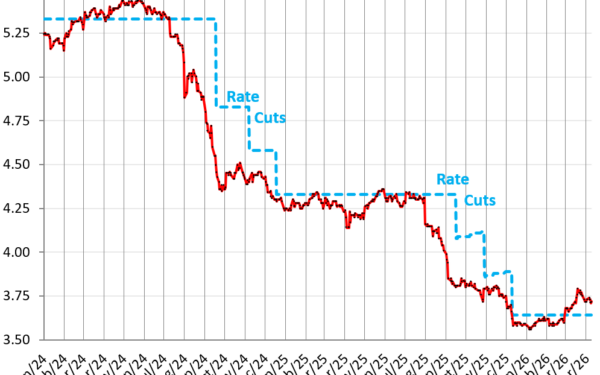
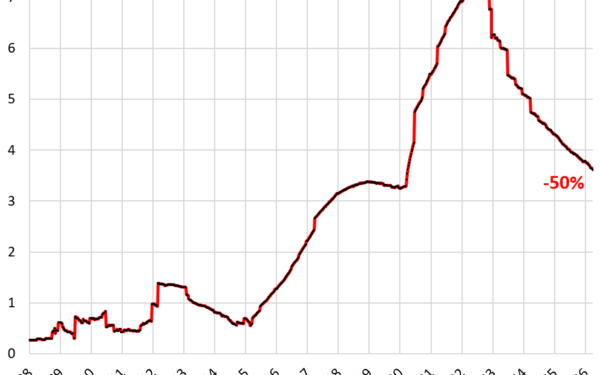
Fed funds sit at 5.25-5.50%. Markets price in three 2024 cuts starting June, per CME FedWatch. Hot PPI data—especially if April repeats—could delay that, echoing 2022’s surprises. Businesses face margin squeezes: energy up, but flat services offer breathing room. Yet cumulative 2024 gains (over 18% annualized across three months) erode pricing power if demand softens.
Skeptically, one data point doesn’t rewrite the script. Core PPI (excluding food/energy) rose milder at 0.1% month-to-month. Geopolitical wildcards—Middle East tensions, China demand—could flip energy lower. Track April’s ISM prices index and next CPI for confirmation. Bottom line: disinflation stalls here, raising recession odds if the Fed holds rates too long.
Investors, watch corporate earnings calls for cost commentary. Crypto ties in via energy: Bitcoin miners grapple with electricity spikes, potentially hiking fees or offshoring. Broader markets shrugged today—S&P up 0.6%—but sustained PPI fire could reignite bond yields from 4.5% on the 10-year.