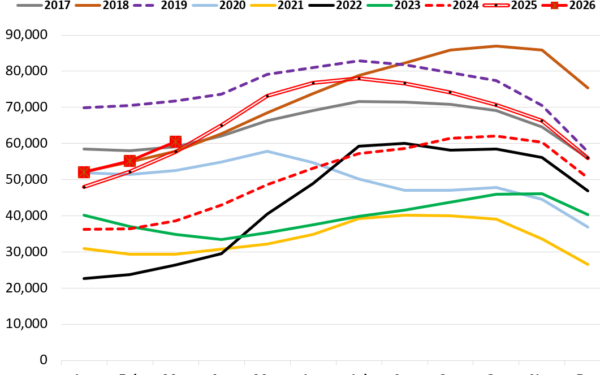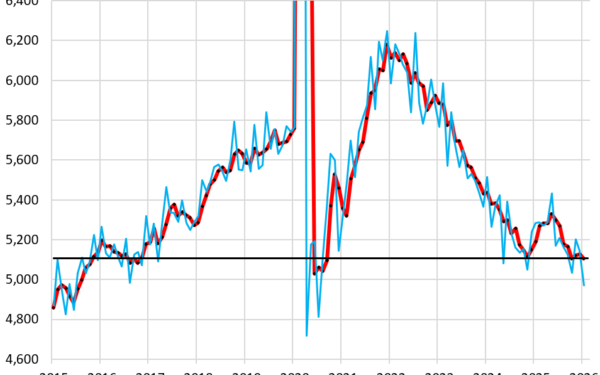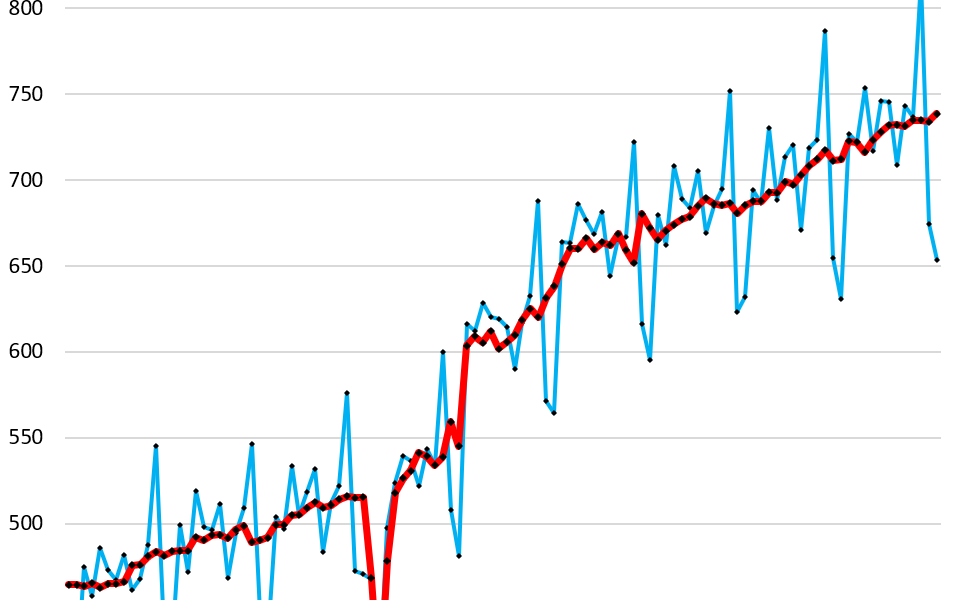
US retail sales hit a record $738 billion in February, up 0.6% from January on a seasonally adjusted basis. Strip away the adjustments, and sales plunged 3.1% to $653 billion—the lowest since last February. Year-over-year, both measures grew 3.7%, beating goods inflation by a wide margin. This pattern repeats annually: December spikes from holiday buying, January and February slump from returns and weather. The Census Bureau’s adjustments aim to smooth it out, but they introduce noise. Over 12 months, these factors net to zero, so one month’s boost means another’s cut.
Focus on year-over-year trends to cut through the monthly volatility. That 3.7% gain signals consumer spending holds firm, powering about 70% of US GDP. Goods inflation sits around 1-2%, far below services, so real spending rises. But revisions loom—February data often gets tweaked later. Skeptical eyes note the adjustments rely on X-13 ARIMA-SEATS software trained on historical patterns. If behaviors shift—like more online shopping—the model lags.
Category Breakdown: Ecommerce Eats Share
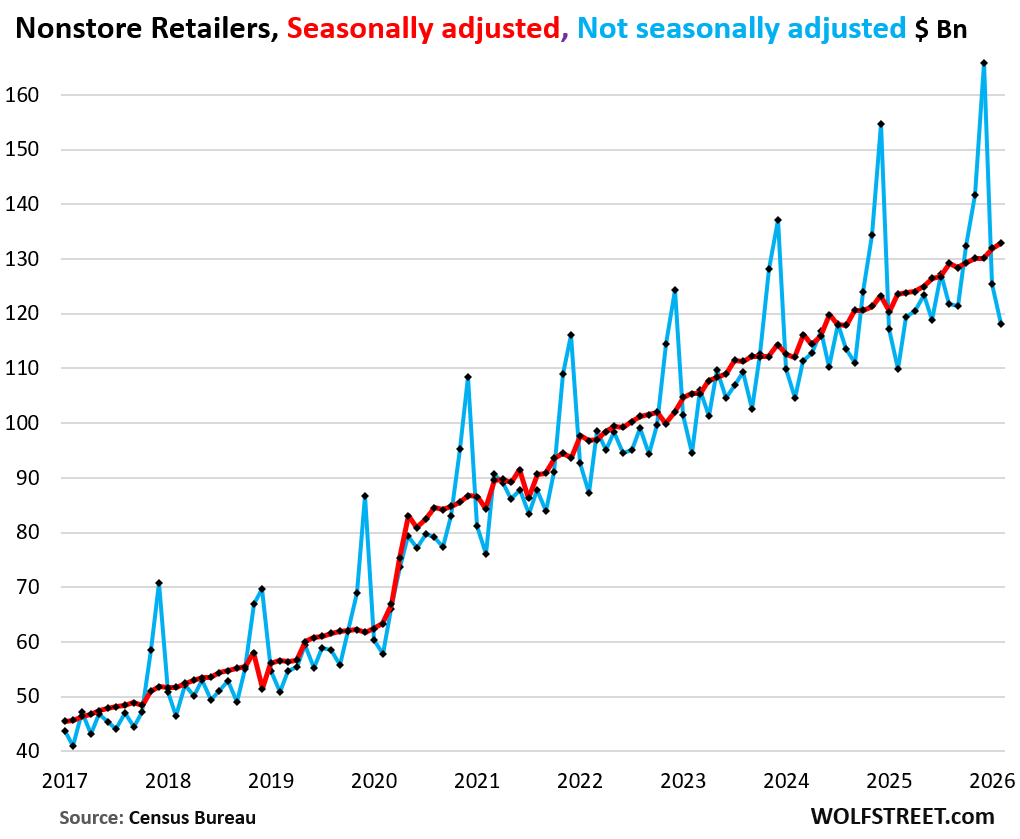
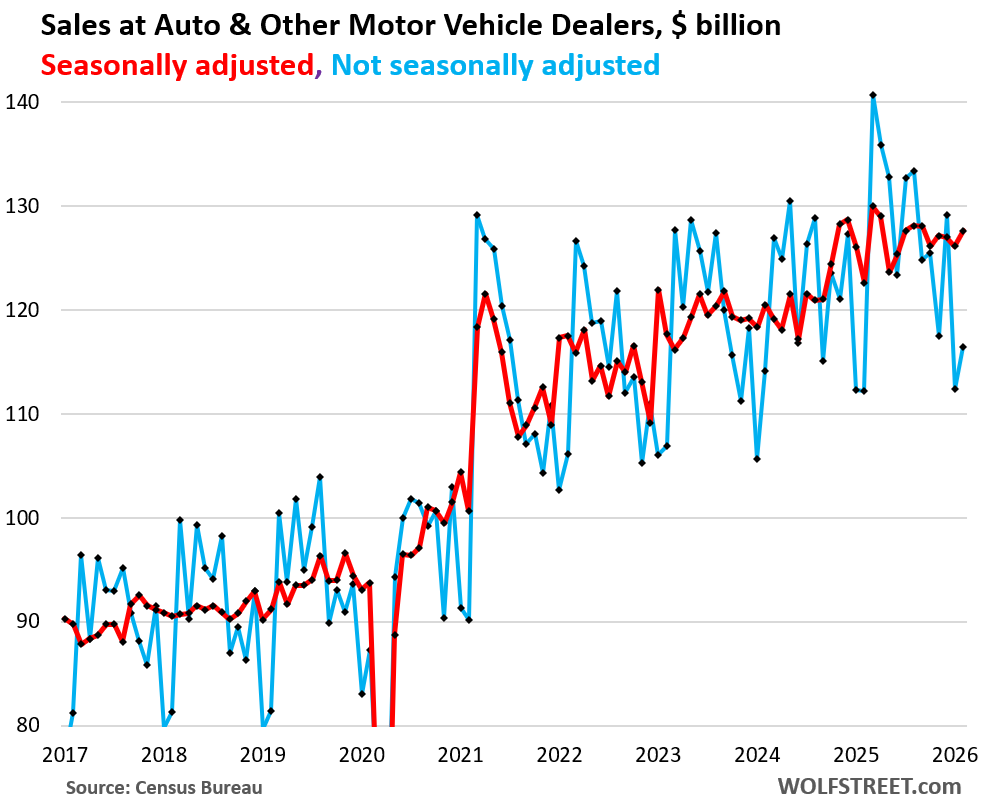
Ecommerce and nonstore retailers, now 18% of total sales, grew 7.5% year-over-year to $133 billion adjusted. That’s double the pace of overall retail. Month-to-month, adjusted sales rose 0.7%; unadjusted fell 5.8% to $118 billion. Amazon and others keep grabbing bricks-and-mortar’s lunch. Autos, 16% of sales, climbed 1.2% adjusted to $128 billion, up 3.7% year-over-year. Unadjusted, they gained 3.6% to $116 billion—steady demand despite high rates and prices averaging $48,000.
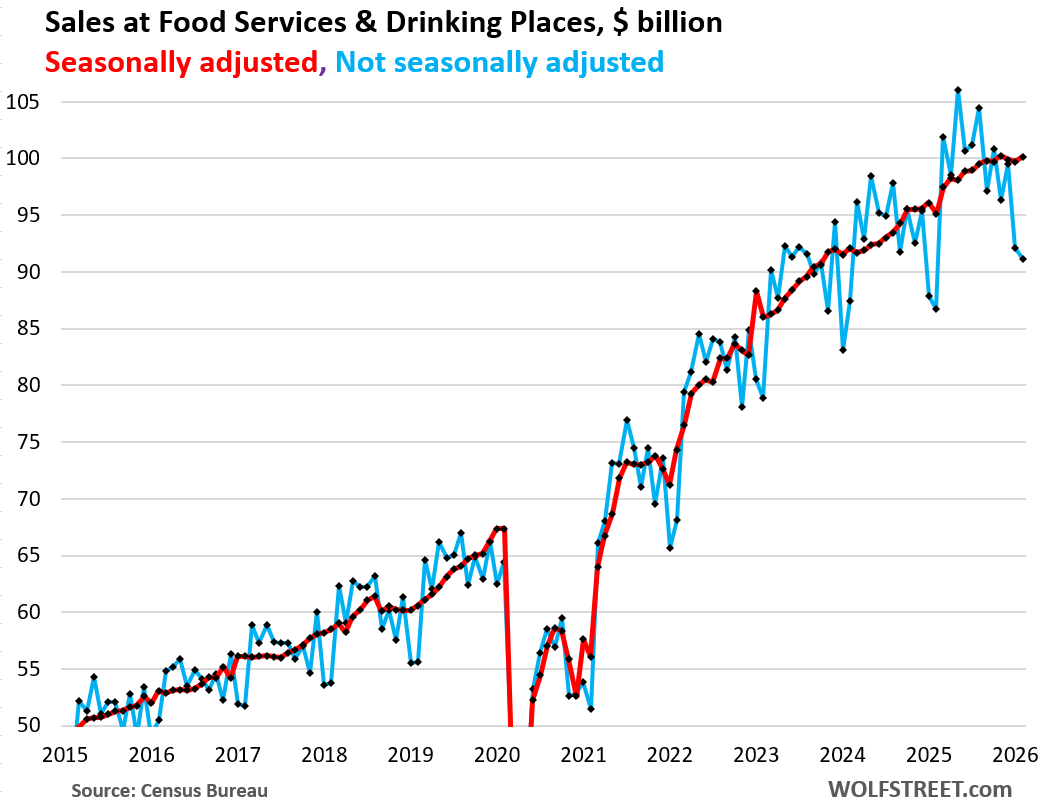
Restaurants and bars (food services, 12% share) edged up 0.4% adjusted to $100 billion, 5% year-over-year. Unadjusted dipped 1.1% to $91 billion. Consumers prioritize experiences over stuff, even as menus inflate.
Food and Beverage Stores: Sharp Drop Raises Flags
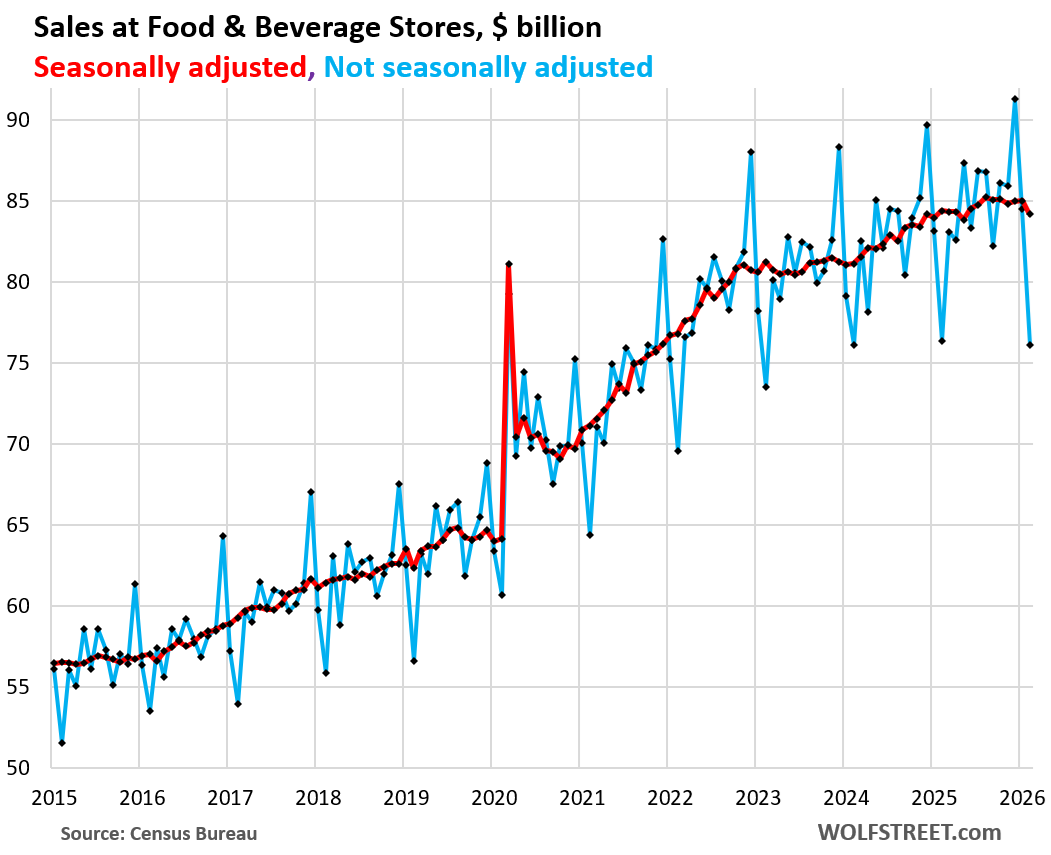
Here’s the outlier: food and beverage stores (11% share) dropped 1.1% adjusted to $84 billion, and cratered 9.9% unadjusted to $76 billion. Year-over-year, sales fell 0.3%—first decline in months. Normal February slumps hover around 5-7% unadjusted; this exceeded that. Supermarkets like Kroger and Walmart grocery aisles took the hit.
What caused it? February had 29 days including Leap Day, yet fewer trading days than January. Harsh weather in parts of the US curbed trips. But dig deeper: grocers lose ground to clubs like Costco (3%+ same-store sales), discounters, and ecommerce delivery. Walmart’s online grocery surges; Amazon Fresh expands. Inflation-weary shoppers hunt deals—grocery prices up 1% year-over-year, but volumes shrink as households swap pricey organics for basics.
This isn’t isolated. Grocery chains report margin squeezes from labor costs (up 4.5% last year) and theft (shrinkage at 2% of sales). Albertsons and Kroger merger talks highlight consolidation pressures. If the drop persists post-revision, it signals accelerated market share loss to supercenters and online. Grocers’ profits already lag S&P averages; P&G and others pivot to club packs.
Why This Matters for Markets and You
Solid overall sales ease recession fears—the Fed’s rate hikes to 5.25-5.5% haven’t crushed spending yet. But cracks show: lower-income households cut back on groceries first. Credit card delinquencies hit 9% for subprime, per Fed data. Savings rates near zero force reliance on debt.
For investors, ecommerce winners like AMZN shine; traditional grocers like SFM struggle. Crypto ties in loosely—consumer strength supports risk assets, including BTC holding $60k+ amid ETF inflows. But watch revisions and March data. If food sales confirm weakness, it flags broader softening.
Bottom line: Retail remains resilient at 3.7% growth, but food’s plunge warrants caution. Track unadjusted YoY for reality; adjustments obscure as much as they reveal. Consumers spend, but choices shift—online, clubs, away from supermarkets. Expect more consolidation and price wars ahead.