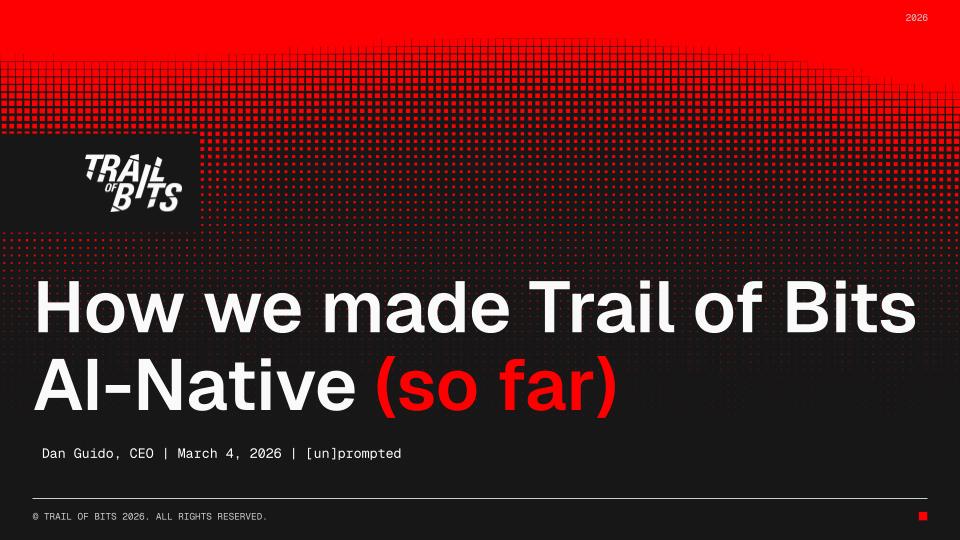
Trail of Bits, a security auditing firm with 14 years auditing crypto and software, reports deploying 94 plugins, 201 skills, and 84 specialized agents. On key engagements, their AI-augmented auditors now spot 200 bugs per week. A year ago, only 5% of the company backed the AI push; today, it’s integral. They open-sourced most tools, letting others test the claims.
This stands against broad evidence of AI failure in enterprises. A National Bureau of Economic Research study of 6,000 executives across the US, UK, Germany, and Australia found two-thirds claim AI use, but actual time averages 1.5 hours weekly per worker. Productivity and employment show zero measurable impact. Fortune called it the new Solow paradox—echoing economist Robert Solow’s 1987 quip: computers everywhere, but nowhere in the stats. AI delivers in labs; companies fumble deployment.
Why the gap? Most hand out ChatGPT logins and expect magic. Trail of Bits built a system. They distinguish three tiers:
AI-Assisted: The Default Trap
Everyone starts here. Workers paste prompts into Claude or GPT for emails, summaries, boilerplate code. Workflows stay identical; AI just accelerates the old grind. No org redesign, no process shift. Studies confirm: this yields marginal gains at best, often offset by distraction or errors from over-reliance.
AI-Augmented: Workflow Rewires
Next level integrates AI into steps. Agents handle initial code reviews; humans refine. Trail of Bits uses this for audits—AI scans first, flags issues, humans verify. Processes change. Their agents draw from 14 years of audit data, compounding expertise. Result: faster cycles, more findings. On peak weeks, 200 bugs surface that manual reviews might miss.
AI-Native: AI as Teammate
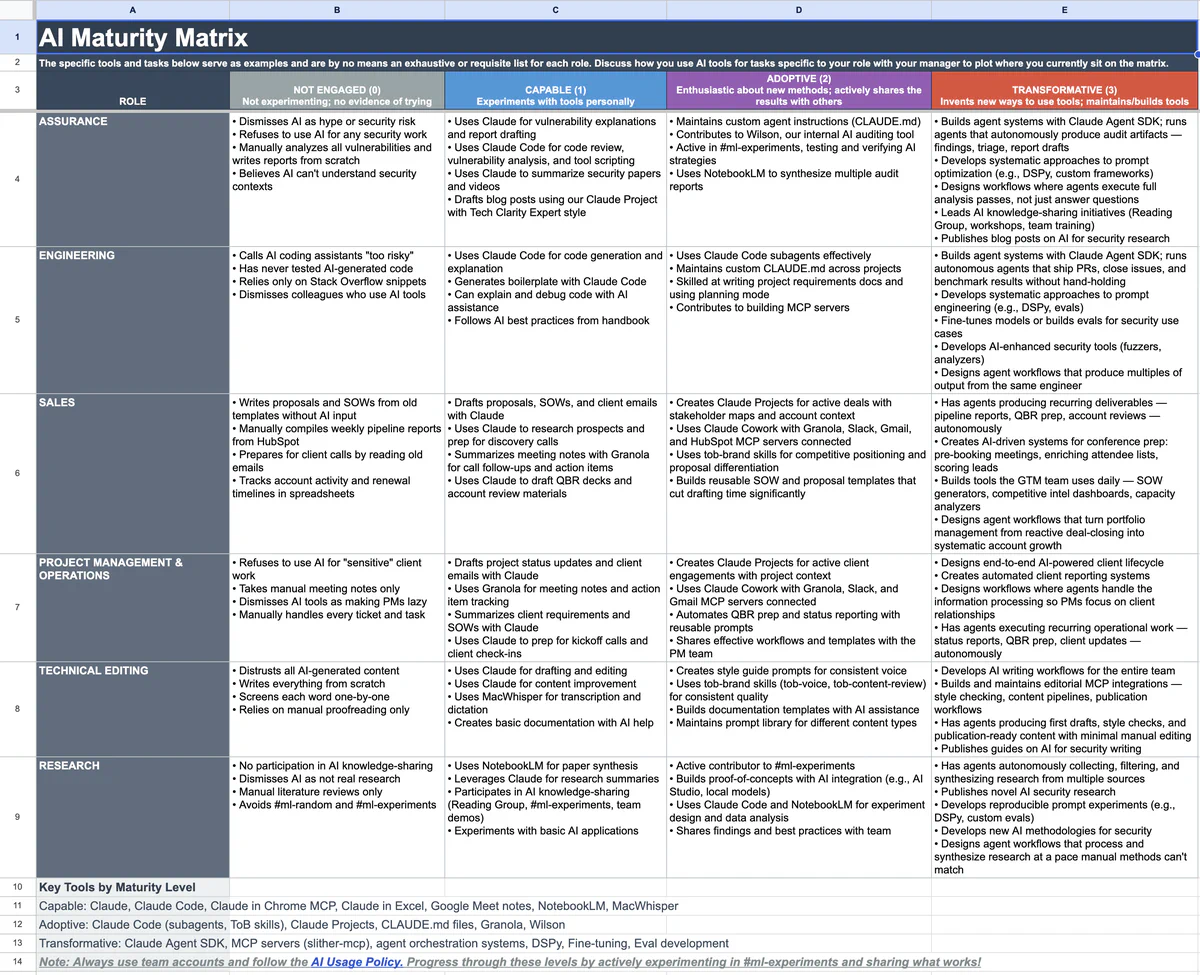
The pinnacle redesigns the firm around AI. Knowledge codifies as reusable code—plugins, skills, agents. Every audit feeds the system, accelerating the next. Engineers wield bespoke agents for crypto protocols, firmware flaws, whatever the gig demands. Trail of Bits claims 94% adoption now. Skeptical? They released the stack open-source; fork it, measure yourself.
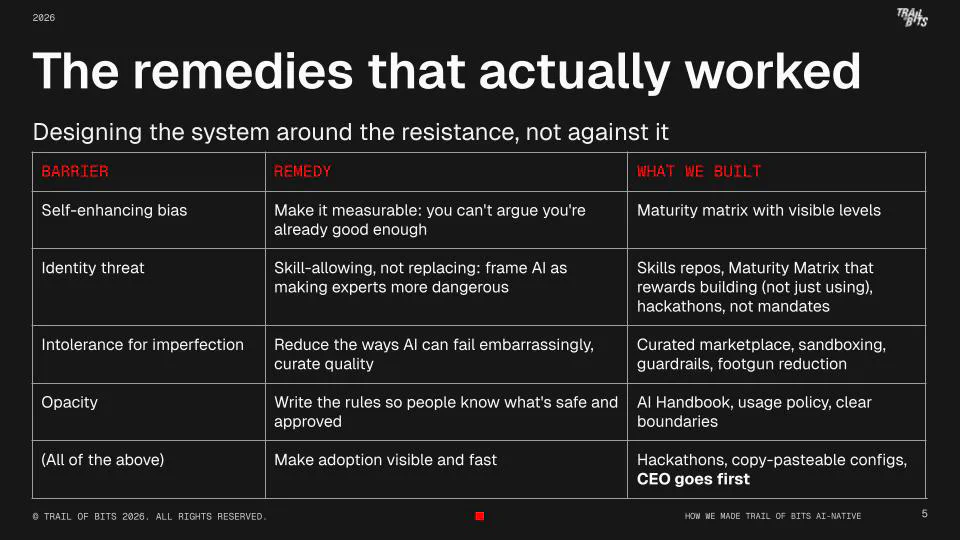
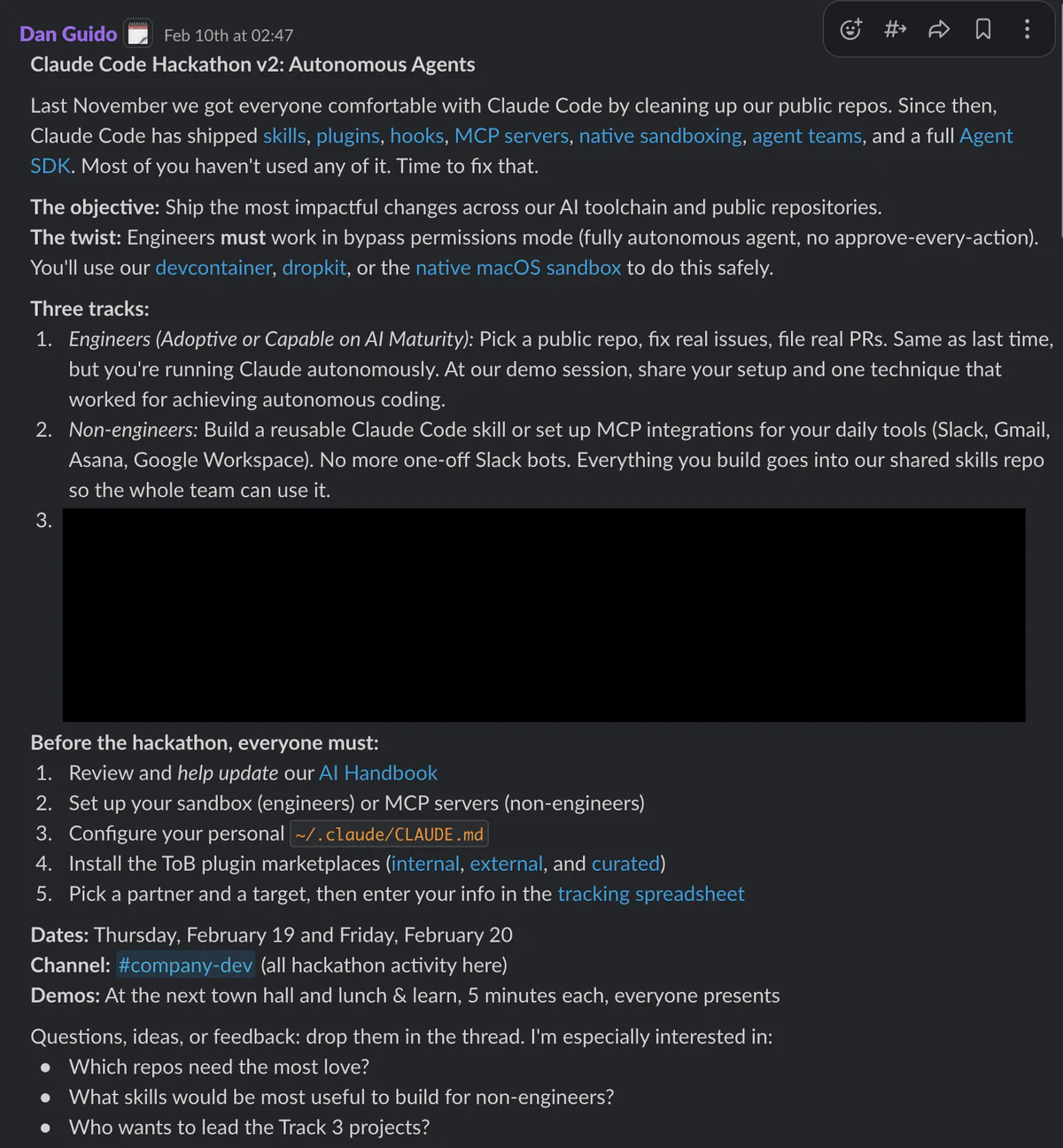
Resistance was fierce initially. Tech adoption research pins failures on people, not tools—status quo bias, fear of obsolescence, sunk costs in old methods. Trail of Bits countered with pilots: quick wins on real audits proved value. No top-down mandates; they let results evangelize. From 5% buy-in to system-wide, it took targeted demos and iteration.
Implications hit security firms hardest. Audits are labor-intensive, error-prone hunts through millions of code lines. Manual teams cap at scale; AI agents don’t tire. If Trail of Bits sustains 200 bugs/week, that’s not hype—it’s a multiplier. Competitors ignore this at peril; clients demand faster, cheaper audits amid rising threats like smart contract exploits costing billions yearly (e.g., $3.7B in 2022 DeFi hacks).
Broader lesson: AI demands system overhaul, not bolt-ons. Finance and crypto outfits—think exchanges, DAOs—face similar paradoxes. Tools alone flop; embed AI in risk models, compliance checks, anomaly detection. But verify claims: productivity stats lag AI adoption by years, per Solow. Trail of Bits may lead, yet firm-wide metrics remain unshared. Watch their GitHub stars and fork activity for proof.
Steal their playbook: start small, measure bugs or tasks automated, scale on evidence. In security, where misses cost fortunes, AI-native edges matter. Most will stay assisted. Winners go native.