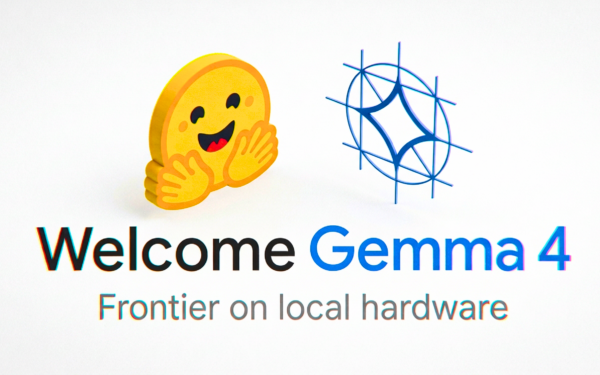
Google DeepMind just released the Gemma 4 family: four open-weight, vision-language models under Apache 2.0 license. Sizes run 2 billion (E2B), 4 billion (E4B), 31 billion, and a 26 billion Mixture-of-Experts variant with 4 billion active parameters. The hook? DeepMind claims these deliver the highest intelligence per parameter yet seen in open models. Small models like these matter because they run on everyday hardware—phones, laptops, edge devices—slashing latency, costs, and cloud dependency.
DeepMind labels the tiniest two as “effective” parameter counts. The system card clarifies this stems from distillation techniques that pack outsized smarts into fewer weights. All handle text and images, enabling tasks like visual question-answering or document analysis. Download them from Hugging Face; they’re instruction-tuned for reasoning out of the box.
Performance Breakdown
Benchmarks show the E2B model topping charts in its class. On standard tests like MMLU (general knowledge), it hits scores rivaling closed models twice its size. The E4B pushes further, matching or beating Llama 3.1 8B on math (GSM8K: 82% vs. 79%) and coding (HumanEval: 71% vs. 68%). The 31B dense model competes with GPT-4 class on select evals, while the MoE—activating just 4B params per token—delivers similar output at half the compute.
Vision benchmarks add weight: On MMMU (multi-discipline multimodal understanding), the 4B variant scores 52%, edging Phi-3.5-vision’s 50%. DeepMind’s eval suite stresses long-context reasoning and tool use, where these models shine without the bloat of 70B+ giants. Skeptical note: Benchmarks aren’t perfect. DeepMind’s selective reporting skips edge cases like hallucination rates or adversarial robustness. Independent runs on LMSYS Arena will tell the real story—early leaderboards already rank the 31B near top open models.
Why This Shifts the Field
Small models exploded in 2024. Microsoft’s Phi-3 mini (3.8B) runs full-speed on iPhones; Mistral’s 7B NeMo deploys in browsers. Gemma 4 joins this pack, proving scaling laws bend toward efficiency. Training costs plummet: A 4B model fine-tunes on a single A100 GPU in hours, not weeks. Inference? E2B needs under 2GB VRAM, fitting Raspberry Pis or wearables.
Implications hit deployment hard. Enterprises ditch $0.01-per-1K-token APIs for local runs, cutting bills 90%+. Developers build privacy-first apps—no data leaves the device. In finance, these crunch charts and filings offline; in security, they scan threats without phoning home to Google.
Crypto angles sharpen: On-chain AI gets viable. Solana or Ethereum nodes run E4B inference for autonomous agents, verifying trades or detecting rugs in real-time. Quant funds load 31B for alpha signals, bypassing black-box Oracles. Open weights mean auditable models—no hidden biases inflating bubbles.
But fairness demands caution. Google controls the recipe: proprietary training data from trillions of tokens, likely including YouTube scraps. Apache 2.0 lets you fork freely, yet distillation opacity hides tricks. These outperform priors byte-for-byte, but cap out on agency tasks—chaining thoughts over hours or multi-step planning lags o1-preview. Still, for 80% of use cases, they suffice cheaper.
Bottom line: Gemma 4 accelerates the squeeze on big iron. Expect forks optimized for ARM, quantized to 2-bit, flooding edge AI. Google cedes ground to open source, betting ecosystem lock-in via tools like Gemma Scope. If leaderboards hold, this redefines “capable” as lean, not large. Track updates on Hugging Face; deploy now and benchmark yourself.