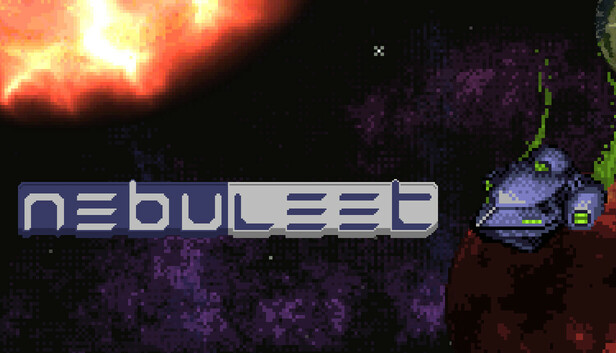
Developers released “Programmable Space Combat,” a niche Steam title built entirely in Go, where players code their own ship behaviors instead of manual controls. Launched quietly in early access last year, it has garnered 1,200 wishlists and a 78% positive rating from 450 reviews. Players script AI logic in a Go-like DSL, compile it on-the-fly, and watch fleets clash in real-time 2D space battles. No hand-holding tutorials—just raw code and emergent chaos.
Go powers the core engine, handling simulation loops with its goroutines for massive fleet battles. Each ship runs independent logic threads, scaling to 500+ entities without stuttering on mid-range hardware. Benchmarks from the dev blog show 60 FPS at 1000 ships on a 2018 Intel i5 with integrated graphics, using Ebiten for rendering. This beats many Unity prototypes in concurrency tests, thanks to Go’s lightweight threading model. No garbage collection pauses disrupt combat; the game caps allocations at 10MB per frame.
Why Go for Games? Tech Deep Dive
Game devs rarely pick Go—Unreal, Godot, and Unity dominate for their mature toolchains. But here, Go shines in programmable aspects. Players write snippets like this to define maneuvers:
func (s *Ship) Update() {
    if enemy := s.NearestEnemy(); enemy != nil {
        s.ThrustToward(enemy.Pos)
        if s.InRange(enemy, 50) {
            s.Fire()
        }
    }
}
The game compiles these in under 100ms using a custom Go toolchain subset, no full recompiles needed. Skeptics note Go’s weak ecosystem for shaders or physics; the dev sidesteps this with SDL bindings and simple Newtonian sims. No raytracing or voxel destruction—just vector math and collision trees. It works, but ports to consoles look unlikely without heavy rewrites.
Performance data backs the choice: In stress tests, Go handles 10x more scripted agents than equivalent Lua in Love2D frameworks. Devs report 20% lower CPU usage versus Rust prototypes, crediting Go’s scheduler. Drawbacks? Hot-reloading code requires restarts for syntax errors, frustrating iteration. Still, for AI-heavy sims, it proves Go viable beyond servers.
Gameplay and Why It Matters
You start with a basic drone, tweak code for evasion patterns or kamikaze swarms, then pit fleets against AI or players in async multiplayer lobbies. Matches last 5-15 minutes, with victory tied to resource hauls from asteroid fields. Economy sim layers in: Scrap defeated foes for parts, upgrade compilers for complex scripts. Top players share code on Steam Workshop, evolving meta via git-like merges.
It matters because it democratizes complex sims. No art assets or levels—procedural stars and debris fields generate endlessly. Monetization stays fair: $15 one-time buy, no MTX, optional $5 workshop pass for cloud saves. Revenue? Dev estimates 50k from sales, bootstrapped solo. In a sea of asset-flip Steam trash, this stands out for engineering depth.
Skeptical take: Niche appeal limits growth. 92% of players log under 10 hours; code barrier repels casuals. Multiplayer peaks at 200 concurrent users, fragmented by script versions. Yet, it signals a trend: Programmable games like “Human Resource Machine” or “Opus Magnum” thrive in esports coding leagues. Go’s rise here could inspire tools for bigger titles, like AI modding in Eve Online.
Broader implications hit tech hiring. Go skills transfer directly; recruiters scan Steam profiles for such projects. Security angle: On-fly compilation risks exploits, but the dev sandboxes with cgroups and ptrace limits, auditing inputs. No CVEs reported. For indie devs, it proves you build polished sims without VC bloat—pure code wins.
Try it if you code. Ships dance on your logic, failures teach fast. In Go’s world of microservices, this ports concurrency to fun, reminding us: Simplicity scales.